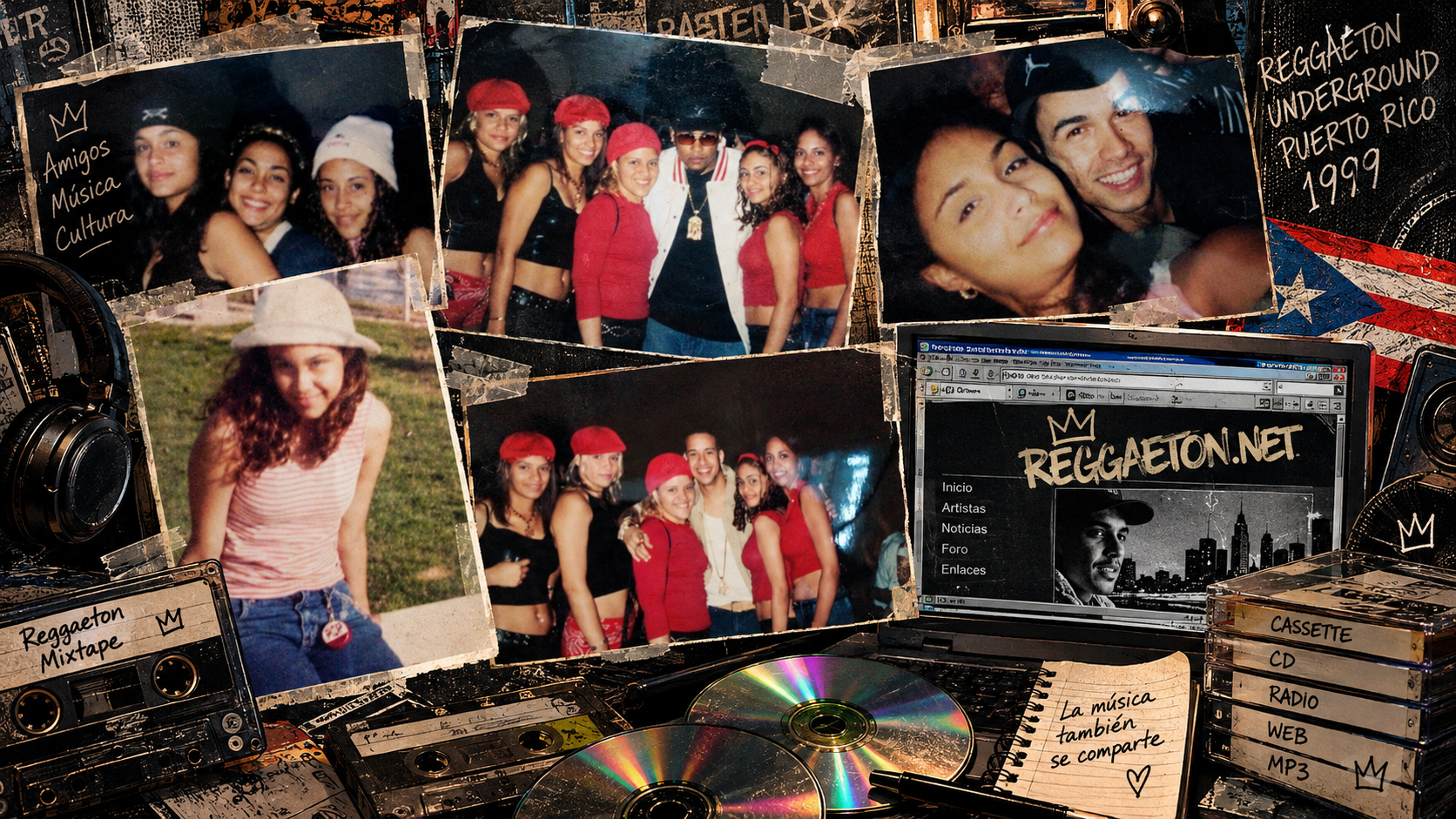

Understanding the technologies and grassroots networks that helped underground reggaetón reach its audience in Puerto Rico during the 1990s.
Before Spotify, YouTube, and social media, discovering new music required a different kind of effort. Songs traveled through physical recordings, personal connections, local music scenes, and—toward the end of the 1990s—the growing possibilities of the internet.
In Puerto Rico, underground reggaetón developed within this changing environment. The story of its distribution is also a story about technology, independent promotion, and the people who helped music find its
1. Cassette Tapes: Music You Could Copy and Share
Cassette tapes were more than a way to listen to music. They were a practical tool for independent distribution.
Music could be recorded, duplicated, compiled, and passed from one person to another. Mixtapes helped listeners discover multiple artists and tracks in one place. They could circulate through friends, local vendors, music shops, DJs, and community networks.
For underground artists and producers, cassette culture offered a way to reach listeners outside traditional record-label channels. It also helped create a sense of discovery: finding a new track could depend on knowing someone who had the right
2. CDs: Better Sound and a New Format
Compact discs offered clearer sound, convenient track selection, and a durable physical format. During the 1990s, CDs became increasingly important in commercial music distribution.
But CDs and cassettes served different purposes. A cassette could be recorded and copied using accessible tape equipment, while professionally manufactured CDs provided a polished retail product. As recordable CD technology became more available, computers also began creating new possibilities for duplication.
The shift was not immediate or identical for everyone. Cost, equipment, and access influenced which formats people
3. Radio, DJs, Music Shops, and Street-Level Networks
Technology alone did not build an audience. Music still needed people to move it.
DJs helped introduce tracks to listeners. Radio exposure could expand recognition. Music shops and informal vendors connected recordings with buyers, while live events and personal recommendations encouraged people to seek out artists.
These channels worked together. Someone might hear a song at an event, ask a friend for a copy, look for a tape or CD, and share the music with another group of listeners.
This was grassroots audience development: music circulated through relationships as much as through formal
4. The Internet Arrives: Websites Become Part of Music Promotion
By the late 1990s, the internet was creating another way to connect artists, music fans, and emerging communities.
Websites could publish artist information, photos, music news, links, and updates. Online communities gave fans a place to discuss music and discover material beyond their immediate neighborhoods.
For an underground genre, a website could function as a digital meeting point—even when physical recordings remained central to listening and distribution.
The technology still had limitations. Many people connected through slow dial-up connections, and transferring large audio files could take a long time. Early websites were often more practical for information and promotion than for seamless music
5. MP3s: Music Begins to Travel as a File
MP3 compression made digital audio files smaller and easier to transfer over the internet. In 1999, Napster helped bring peer-to-peer music sharing into public view, allowing users to locate and exchange music files directly with one another.
This marked a major change: music no longer had to travel only as a cassette, CD, or other physical recording. A digital file could move between computers.
However, access to the technology was uneven, and not every website or music community distributed downloadable tracks. It is important to distinguish online promotion, authorized digital distribution, and unauthorized file sharing; they were not the same
6. Distribution Was Never Just About the Format
Each technology created different opportunities:
- Cassette tapes: affordable duplication and personal sharing.
- CDs: improved audio quality and a polished physical product.
- Radio and live events: discovery, exposure, and audience connection.
- Early websites: information, visibility, and online communities.
- MP3s: smaller digital files that could move between computers.
None of these technologies built an audience by itself. Artists, producers, DJs, promoters, vendors, website creators, and fans all played roles in helping music travel.
The lesson extends beyond reggaetón. Every generation of music distribution has depended on a combination of tools and people willing to use them
Preserving the History of Underground Music
Remembering the history of reggaetón means looking beyond the recordings themselves. It also means documenting how music was copied, sold, promoted, discussed, and discovered.
Do you remember buying mixtapes, trading cassette recordings, collecting CDs, visiting early music websites, or discovering underground artists through friends and DJs?
Share your memories. These everyday experiences are part of the larger history of how Puerto Rican music reached its audience.