
When the Wound Isn’t Only What Happened—But What It Meant
Not every wound from service looks like PTSD.
Sometimes, the hardest part isn’t what happened to you.
It’s what you had to do, witnessed, failed to prevent, or were asked to carry.
That is where the conversation about moral injury becomes important.
PTSD and moral injury can overlap. They can exist together. But they are not the same thing.
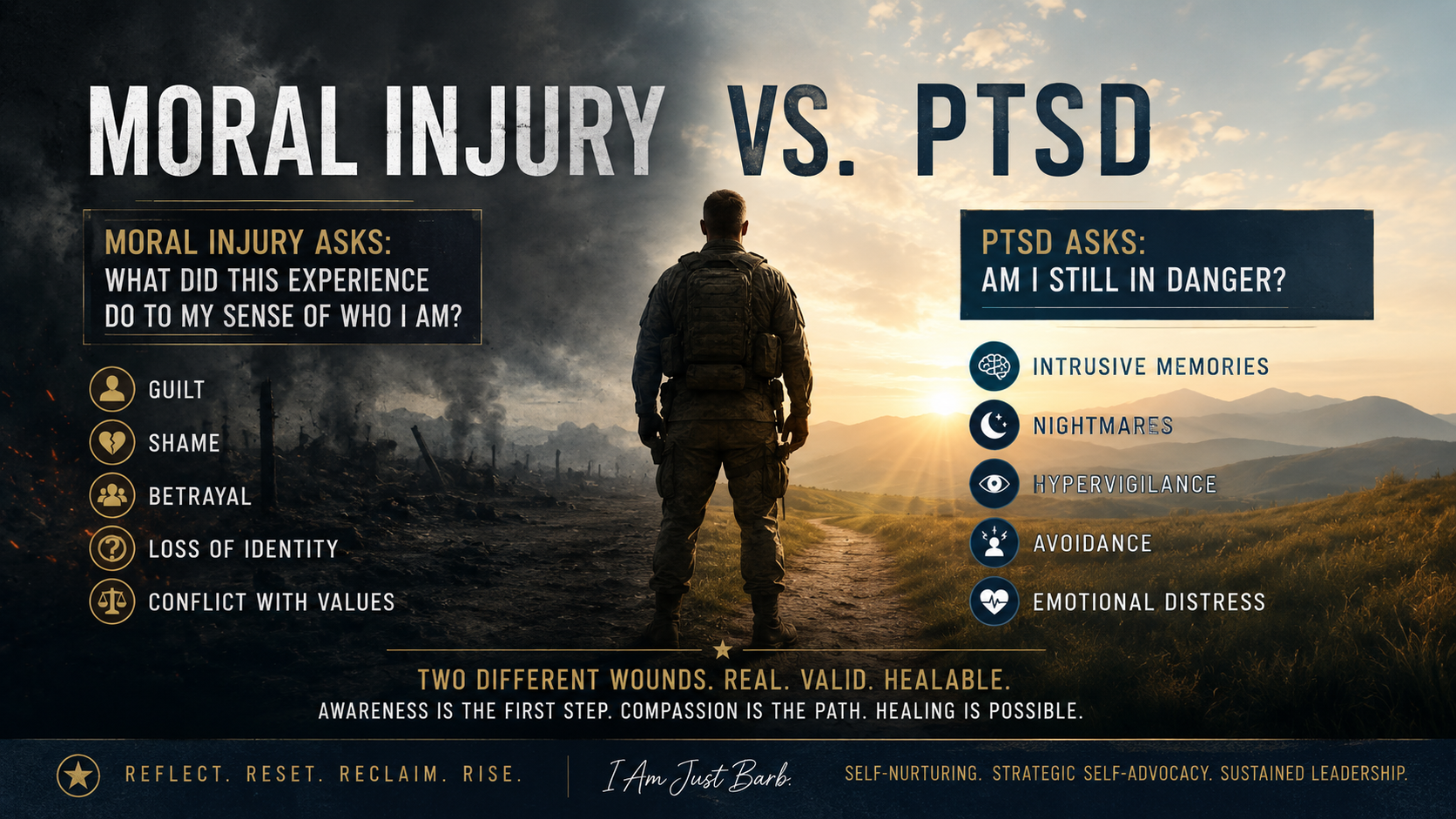
PTSD asks:
“Am I still in danger?”
Your nervous system may remain on high alert long after the threat has passed.
You may experience intrusive memories, nightmares, avoidance, hypervigilance, emotional distress, or a persistent sense that something terrible is about to happen.
Moral injury asks:
“What did this experience do to my sense of who I am?”
Moral injury can occur when an experience deeply conflicts with your values, beliefs, expectations, or sense of right and wrong.
You might struggle with:
- Guilt over something you did—or didn’t do
- Shame about who you believe you became
- Anger toward yourself, others, leaders, institutions, or systems
- Grief over what was lost
- Feeling betrayed by someone you trusted
- Questioning your identity or purpose
- Feeling disconnected from the person you were before
- Difficulty forgiving yourself or others
And sometimes there is no simple answer.
You can understand why something happened and still struggle with what it meant.
You can know you were following orders and still carry guilt.
You can know you did your best and still wonder whether your best was enough.
You can survive an experience and still feel like a part of you never came home.
The difference matters.
PTSD is primarily associated with a response to trauma and perceived threat.
Moral injury centers more on a violation of deeply held moral beliefs or expectations.
One may leave you asking:
“Am I safe?”
The other may leave you asking:
“Am I still the person I thought I was?”
And sometimes the answer is:
Both.
A Different Kind of Healing
Healing from moral injury isn’t about pretending something didn’t happen.
It isn’t about forcing forgiveness.
It isn’t about telling yourself to “get over it.”
It may begin with creating enough space to examine what happened without immediately judging yourself for how you responded.
Ask yourself:
What am I carrying that belongs to the event—and what am I carrying because I believe it says something about me?
Those are not always the same thing.
Your actions during survival, duty, fear, confusion, or circumstances beyond your control deserve to be understood within their context.
You are allowed to examine your story without sentencing yourself for it.
MICRO-REFLECTION
Take a few quiet minutes and complete these sentences:
What happened:
What I believe it meant about me:
What I wish I could change:
What I need to understand differently:
What part of this story do I need compassion for?
You don’t have to solve everything today.
Sometimes healing begins with separating what happened to you from what you have decided it means about you.
Reflect. Reset. Reclaim. Rise.
Your story may contain things you never wanted to carry.
But carrying something does not mean it has to define you forever.
You are more than what happened.
You are more than what you were asked to do.
And you are more than the worst moment you remember.
— Barbara
Until next time, take care and keep shining! 👋🏽✌🏽🐝✨