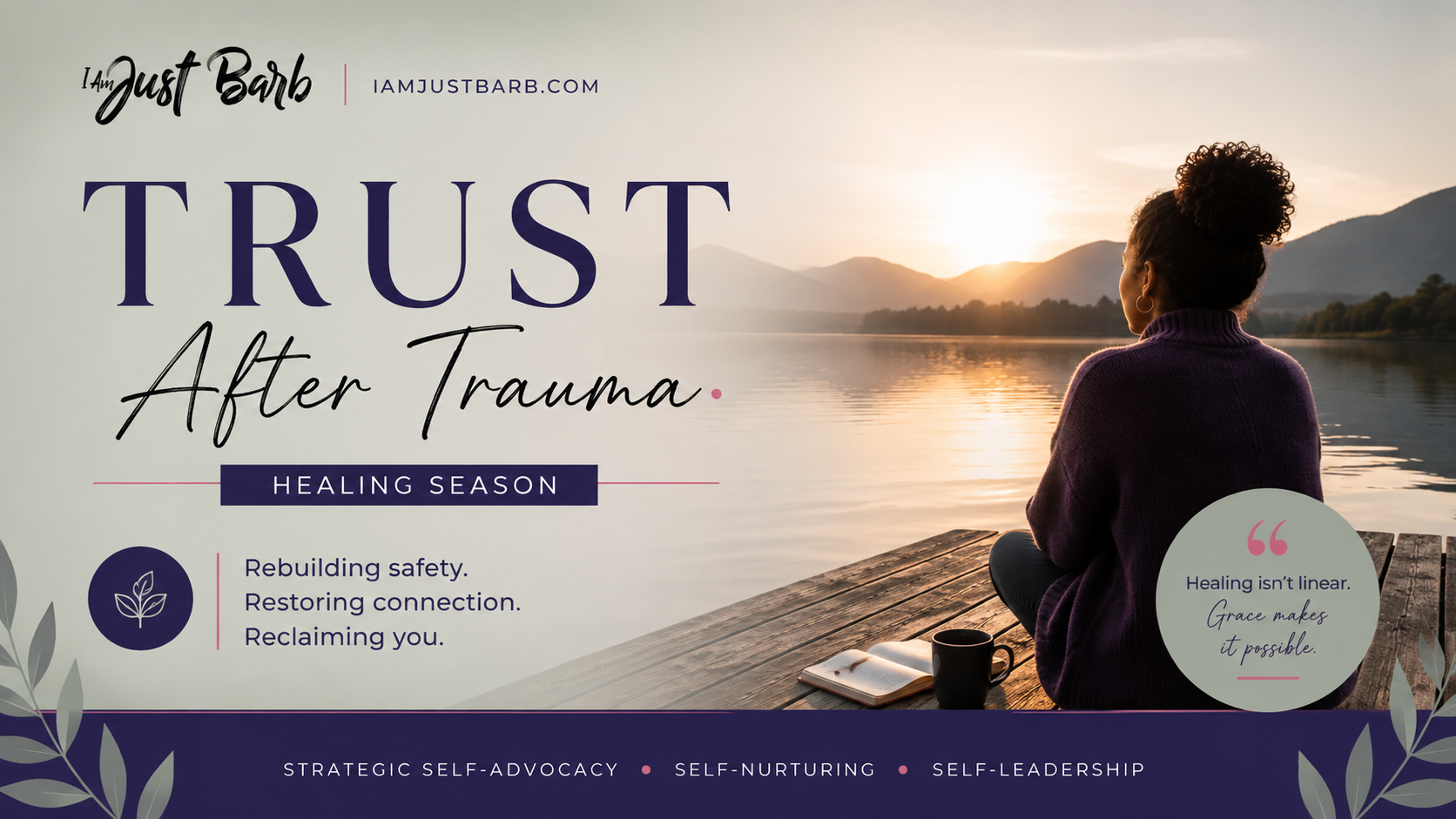

Trust After Trauma — A Healing Season
Healing can change the way you understand trust.
After trauma, trust may no longer feel simple. You may question people’s intentions, overthink conversations, anticipate disappointment, or feel safer depending only on yourself.
And sometimes, that isn’t because you don’t want to trust.
It may be because your brain learned that staying alert was safer than letting your guard down.
But healing introduces a different possibility:
You can learn that not every person is a threat.
Not every silence means rejection.
Not every disagreement means abandonment.
And not every vulnerable moment will end in pain.
Trust doesn’t have to mean giving everyone access to you.
Healthy trust can include boundaries, discernment, patience, and observation.
You don’t have to rush into trusting someone.
You can let trust develop through consistency.
You can watch whether someone’s words align with their actions.
You can give yourself permission to say no without explaining everything.
And perhaps most importantly, you can begin rebuilding trust with yourself.
Trust yourself to recognize discomfort.
Trust yourself to leave situations that aren’t healthy.
Trust yourself to ask for help.
Trust yourself to slow down.
Trust yourself to make mistakes without believing you have failed.
A Healing Season Reminder
Healing isn’t about becoming the person you were before the trauma.
It’s about becoming someone who can move forward with wisdom instead of fear, boundaries instead of walls, and discernment instead of constant suspicion.
As Scripture reminds us:
“There is a time for everything, and a season for every activity under the heavens.” — Ecclesiastes 3:1
Maybe this is your season to rebuild.
Not all at once.
Not perfectly.
One safe experience at a time.
One honest conversation at a time.
One boundary at a time.
One moment of choosing peace over protection at a time.
You survived by learning how to protect yourself.
Now, in your healing season, you can learn when it is safe to open the door again.
This reflection is for educational and coaching purposes and is not a substitute for professional mental health care.
Until next time, take care and keep shining! 👋🏽✌🏽🐝✨