
You served. You may have earned more benefits than you realize.
Whether you’re currently serving, preparing to leave the military, recently separated or retired, or have been out of uniform for years, understanding your veteran benefits can make a significant difference in your next chapter.
But here is something many service members learn too late:
Transitioning from the military isn’t just about finding your next job. It’s also about understanding what you may have earned through your service.
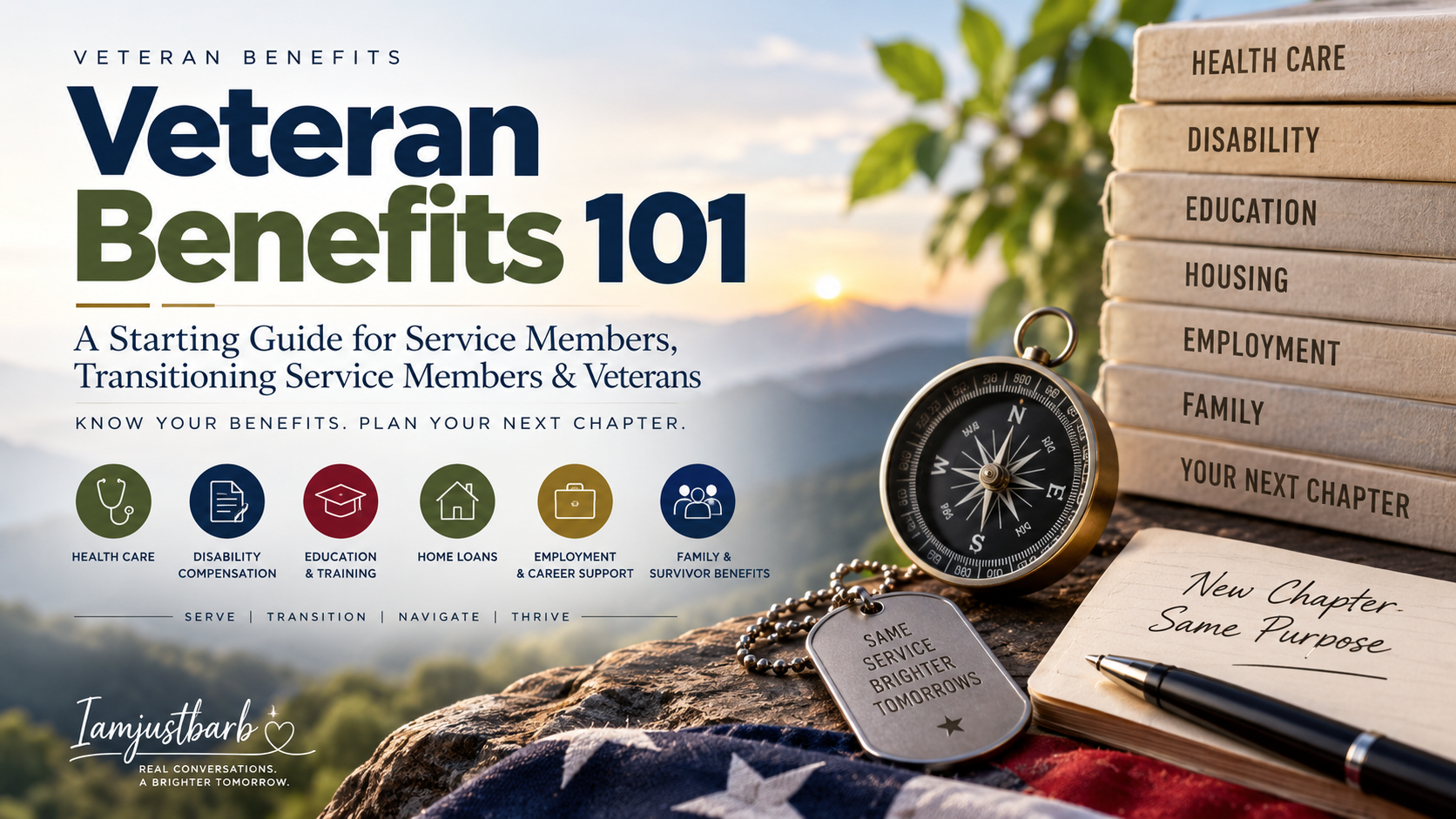
VA benefits can include much more than disability compensation. Depending on your service, eligibility, and individual circumstances, benefits may include health care, education and training, home loans, life insurance, Veteran Readiness and Employment, disability compensation, pension, survivor benefits, burial and memorial benefits, and other services.
The challenge is knowing where to start.
That’s what Veteran Benefits 101 is about.
What Are Veteran Benefits?
Veteran benefits are programs and services provided by the federal government, state governments, and other organizations to support eligible service members, veterans, their families, and survivors.
The Department of Veterans Affairs administers a wide range of federal benefits.
These can include:
- Disability compensation
- VA health care
- Education and training benefits
- VA home loan benefits
- Veteran Readiness and Employment (VR&E)
- Life insurance
- Pension
- Survivor benefits
- Burial and memorial benefits
- Caregiver and family support
- Employment and transition resources
VA’s own transition materials describe benefits across areas including health care, disability compensation, education, housing, employment, pension, life insurance, and memorial benefits. (VA Benefits)
The important part: Not every veteran qualifies for every benefit, and eligibility can depend on factors such as your type and length of service, discharge characterization, service dates, disability status, income, dependency status, and other requirements.
1. Start With Your Military Records
Before you begin navigating benefits, start by understanding your military record.
Important documents may include:
- DD Form 214
- NGB Form 22
- Military orders
- Deployment records
- Service treatment records
- Personnel records
- Medical records
- Awards and decorations
- Line-of-duty documentation
- Training records
- VA medical records
- Previous VA decisions
Your records help establish your military history and can be important when determining eligibility or supporting a benefits application.
Don’t assume that someone else has all of your records.
Take the time to learn what you have and where important documents are located.
2. VA Disability Compensation
One of the most recognized VA benefits is disability compensation.
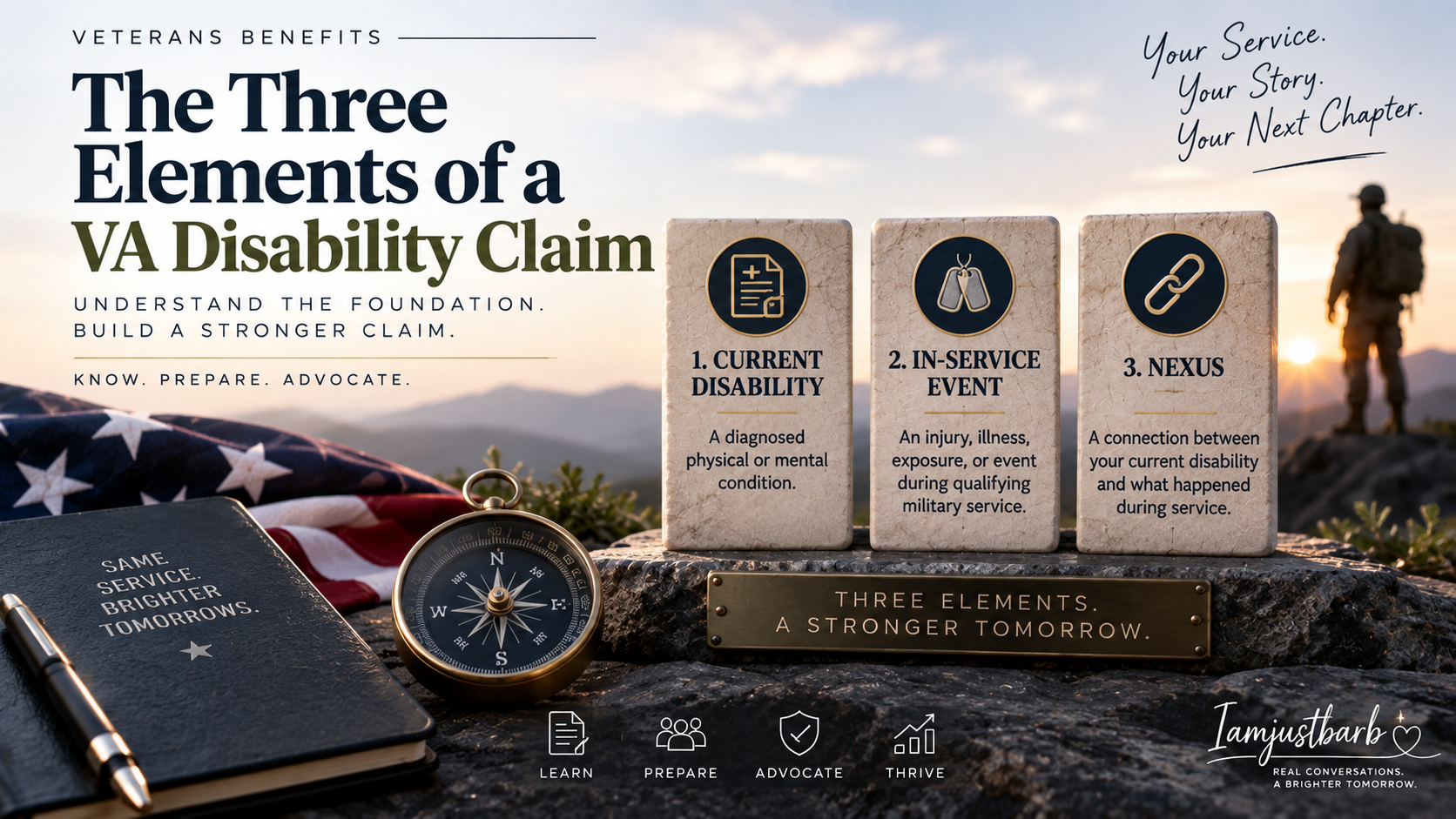
If you have a current illness or injury that was caused or aggravated by qualifying military service, you may be eligible for VA disability compensation.
A disability claim generally involves more than simply having a diagnosis.
Your claim may involve questions such as:
What condition do you have?
When did it begin or worsen?
What happened during your service?
Is there a connection between your current condition and your qualifying service?
Medical evidence, military records, personal statements, and other evidence may all be relevant depending on the circumstances of the claim.
If you’re considering filing a claim, don’t wait until you are overwhelmed by paperwork to start learning about the process.
3. VA Health Care
VA health care is another major benefit veterans should explore.
Eligibility for VA health care depends on several factors, including your service history and other eligibility requirements.
VA provides health care services through its health care system, and veterans may also have access to mental health services and other specialized care.
VA encourages transitioning service members to learn about health care options before or during the transition process. (Veterans Affairs)
Your health should be part of your transition plan—not an afterthought.
4. Education & Training Benefits
Your military service may also provide opportunities for education and career development.
Depending on your eligibility, education benefits may help with:
- College
- Graduate school
- Vocational training
- Technical programs
- Apprenticeships
- Licensing
- Certification
- Other approved education or training
The VA’s transition resources specifically identify education and training as an important area for service members and veterans to explore. (DiscoverVA)
Before enrolling in a program, make sure you understand your eligibility and how your specific benefit works.
5. VA Home Loan Benefits
For eligible veterans and service members, the VA Home Loan Guaranty Program can be an important tool for buying, building, repairing, or adapting a home.
VA describes the home loan guaranty as a lifetime benefit that may be used multiple times when eligibility requirements are met. (DiscoverVA)
But remember:
Being eligible for a VA home loan doesn’t mean you have to use it.
Learn how the benefit works, understand the requirements, and make an informed decision based on your financial situation.
6. Veteran Readiness & Employment
If a service-connected disability affects your ability to prepare for, obtain, or maintain suitable employment, you may want to explore Veteran Readiness & Employment (VR&E).
VR&E can provide employment and career-related services to eligible veterans and service members.
For some veterans, the program may be part of a larger career transition strategy.
The important lesson?
Don’t assume that your military career has to determine your civilian career.
There may be resources available to help you build your next professional chapter.
7. Guard & Reserve Veterans
If you served in the National Guard or Reserves, don’t assume that your benefits are identical to—or completely different from—those of an active-duty service member.
Eligibility can depend on the nature and duration of your qualifying service and the specific benefit you’re seeking.
VA specifically provides transition education addressing benefits for Reserve and National Guard members, including education, career support, home loans, health care, disability compensation, and burial services. (DiscoverVA)
This is why understanding your orders, service records, and periods of qualifying service can be especially important.
Your service deserves to be understood on its own terms.
8. Benefits for Families & Survivors
Veterans benefits aren’t limited to the individual who served.
Depending on eligibility, spouses, children, dependents, caregivers, and survivors may have access to certain programs and services.
These may include:
- Dependency benefits
- Survivor benefits
- Education assistance
- Health care resources
- Caregiver support
- Burial and memorial benefits
- Financial assistance
- Family support programs
If you’re a family member reading this, don’t assume that benefits are only for the person who wore the uniform.
Ask questions. Learn what may be available to your family.
9. State Veterans Benefits
Federal benefits aren’t the only benefits worth exploring.
Many states provide additional programs for veterans and their families.
For example, the Virginia Department of Veterans Services (DVS) connects Virginia veterans and families with federal, state, and local benefits and operates 38 benefits-service offices throughout the Commonwealth. DVS states that its benefits services are provided free of charge. (Virginia Department of Veterans Services)
State programs can include resources related to:
- Employment
- Education
- Health care
- Housing
- Taxes
- Transportation
- Long-term care
- Family support
- Veteran recognition
If you’ve moved to a new state after military service, take time to investigate what that state offers.
10. Don’t Wait Until You Need a Benefit to Learn About It
One of the biggest mistakes service members and veterans can make is waiting until there is a crisis.
You don’t have to understand everything today.
Start with the basics.
Ask yourself:
What benefits might I qualify for?
Do I have my military records?
Have I enrolled in VA health care if I may be eligible?
Have I documented conditions or injuries related to my service?
Have I explored education and career benefits?
Do I understand my home loan options?
Are there benefits available to my spouse or dependents?
What benefits does my state offer?
And perhaps most importantly:
Who can help me understand my options?
Where Do I Start?
If you’re transitioning from military service, don’t wait until your final day in uniform to begin learning.
The VA’s Transition Assistance Program (TAP) provides information and resources to help service members and their families prepare for civilian life. VA also offers a VA Benefits 101 module and specific resources for Reserve and National Guard members. (DiscoverVA)
If you’re already a veteran, you can still start today.
You don’t have to know everything.
You simply need to know your next question.
Veteran Benefits Are About More Than Paperwork
Benefits can sometimes feel like forms, deadlines, regulations, medical records, and government terminology.
But behind every claim is a person.
A person who served.
A family who supported them.
A career that may be changing.
A body that may have changed.
A life that may look very different after military service.
Understanding your benefits isn’t about asking for something you didn’t earn.
It’s about understanding what resources may be available to you because of your service.
And learning how to navigate that process is part of becoming your own advocate.
Your Next Step
You don’t need to figure everything out at once.
Start with one benefit.
One document.
One question.
One conversation.
Learn. Prepare. Ask questions. Advocate for yourself.
Your military service is part of your story.
Your next chapter is yours to build.
Helpful Veteran Resources
U.S. Department of Veterans Affairs
Start with the official VA website to explore benefits, health care, disability compensation, education, housing, and other programs.
VA.gov — U.S. Department of Veterans Affairs
VA Benefits
VA Disability Compensation
VA Health Care
Transition Assistance
VA Transition Assistance Program
Virginia Department of Veterans Services
Virginia veterans, service members, and families can connect with DVS benefits representatives and other resources. DVS operates 38 benefits-service offices across Virginia. (Virginia Department of Veterans Services)
Virginia Department of Veterans Services
DVS Benefits Services:
844-VDVS-VET (844-838-7838)
Email: info@dvs.virginia.gov (Virginia Department of Veterans Services)
Virginia Veteran & Family Support
Virginia’s Veteran and Family Support program serves veterans, transitioning service members, Virginia National Guard and Reserve members, and eligible family members with connections to benefits, health, housing, employment, education, and community resources. (Virginia Department of Veterans Services)
Virginia Veteran & Family Support
A Note From Iamjustbarb
This Veterans Benefits section is designed to make complicated information easier to understand.
My goal isn’t to: tell you what you should claim or promise what you will receive. My goal is to help you become more informed about the questions you should be asking, the resources available to you, and the steps you can take to become a stronger self-advocate.
Because sometimes the first step isn’t filing a claim.,
Sometimes the first step is simply learning what questions to ask.
Disclaimer
This article is for general educational and informational purposes only. It is not legal advice, medical advice, or individualized VA claims advice, and reading this article does not establish an accredited representative or attorney-client relationship. VA eligibility and requirements vary based on individual circumstances and may change. Always verify current requirements with the U.S. Department of Veterans Affairs or an accredited Veterans Service Officer, attorney, or claims agent.
Until next time, take care and keep shining! 👋🏽✌🏽🐝✨
A Note on AI: Some content may be AI-assisted and is reviewed and edited before publication. This site is intended for educational purposes, so please verify important or time-sensitive information with official sources.