
Gratitude is often described as an attitude.
But what if it is also a practice that helps shape how we experience our lives?
Our brains are constantly scanning for what needs attention—what went wrong, what feels unsafe, what needs to be fixed, and what might happen next. When stress becomes our default setting, it can become difficult to notice what is still good, meaningful, or working.
Gratitude doesn’t mean ignoring the hard things.
It means creating space to notice something else.
A moment of peace.
A supportive person.
A lesson learned.
A small accomplishment.
A second chance.
A breath between difficult moments.
That shift in attention matters.
Practicing gratitude can encourage us to slow down and intentionally recognize positive experiences rather than allowing our attention to remain completely consumed by problems. Over time, that practice can become part of a healthier emotional routine.
For someone navigating chronic stress, transition, trauma, or simply a demanding season of life, gratitude can become a form of self-nurturing.
Not because everything is okay.
But because everything is not bad.
A Simple Practice
Before you begin your day, ask:
What is one thing I can appreciate today?
It doesn’t have to be profound.
Maybe it’s your morning coffee.
Maybe it’s having another opportunity to try.
Maybe it’s someone who checked on you.
Maybe it’s simply the fact that you made it through yesterday.
Gratitude doesn’t erase the struggle.
It reminds you that the struggle is not the whole story.
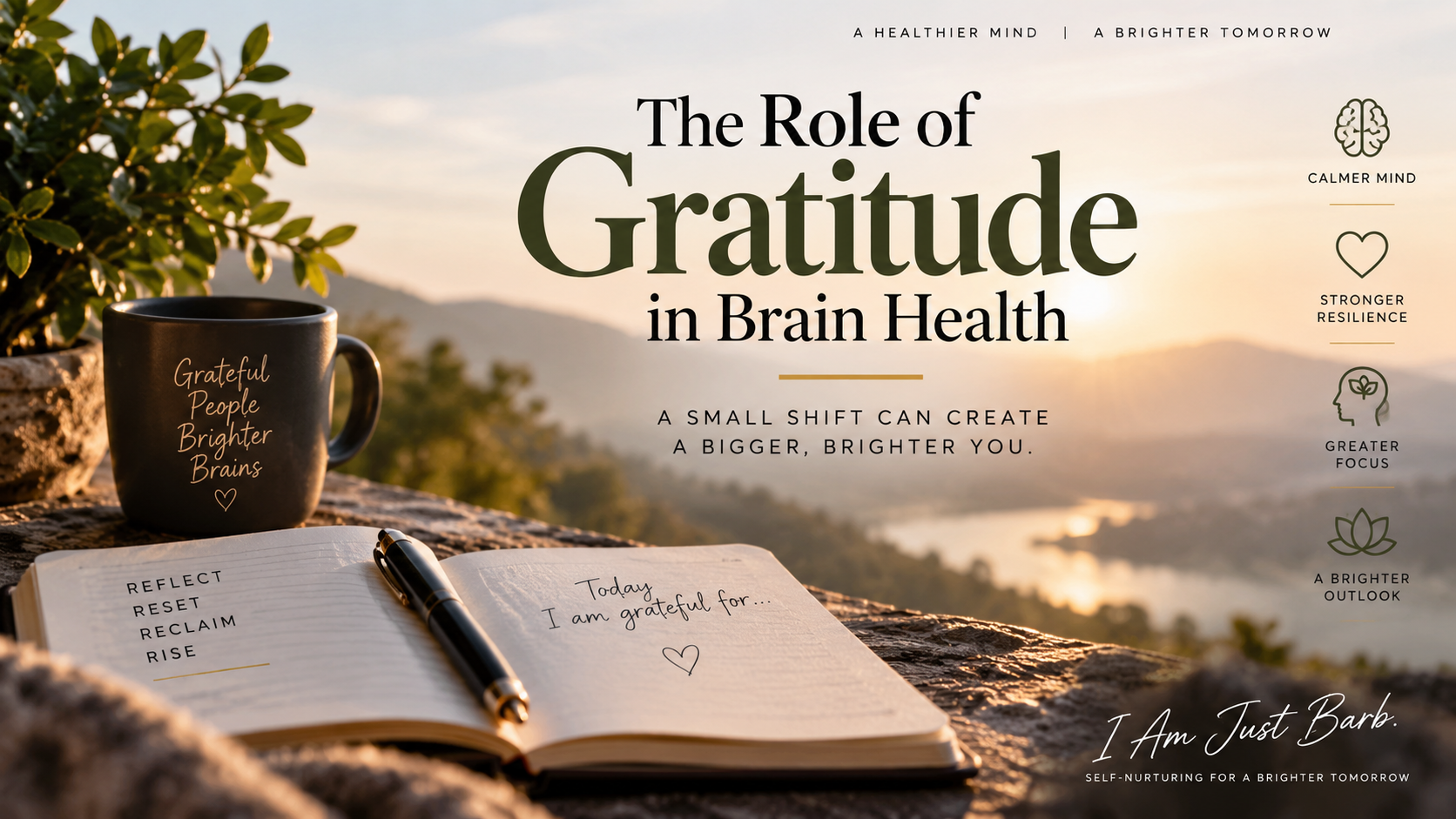
Reflect. Reset. Reclaim. Rise.
— Barbara